PDF guideChapter 5
Your 7-Day Reset Plan
Take a closer look at the whole-food approach described in Chapter 5 with a seven-day plan designed to make the ideas easier to put into practice.
Coming soon
Your official book companion
Go deeper into H.E.A.R.T.: The Five Overlooked Drivers of Cardiovascular Health. Explore the science behind the chapters and find practical tools to help you take your next step.
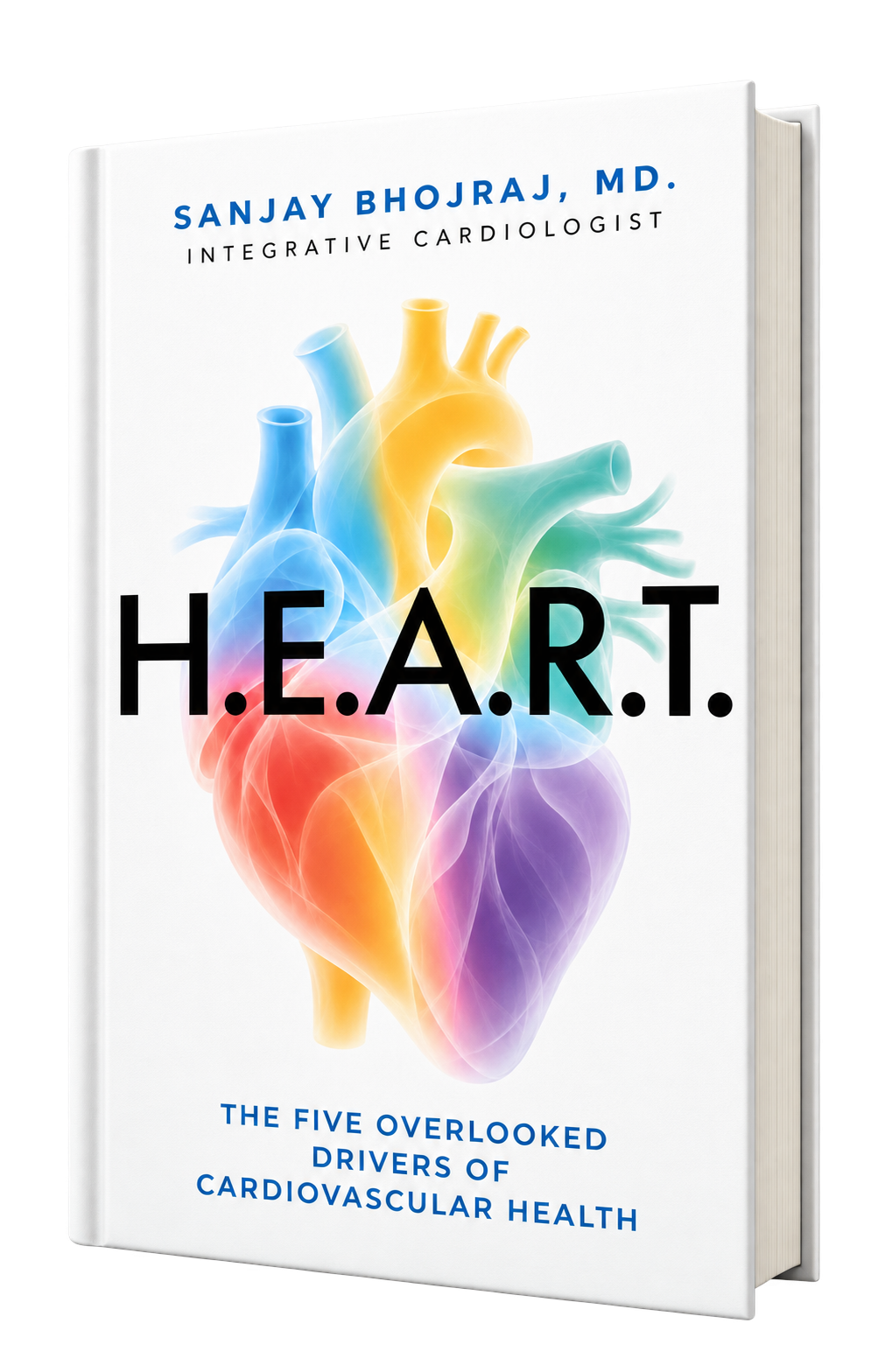
From understanding to action
Return to the guides, tools, and videos mentioned in the book. Choose what matters to you, and move forward at your own pace.
Take a closer look at the whole-food approach described in Chapter 5 with a seven-day plan designed to make the ideas easier to put into practice.
Explore Sanjay's guide to ten laboratory markers he believes are worth discussing with a qualified clinician when considering cardiovascular health.
Use Sanjay's guide to approach change one step at a time rather than attempting to overhaul every habit at once.
Explore the guide to interpreting HRV and Sanjay's device recommendations.
The 21-day guided breathing program introduced in Chapter 10.
Explore Sanjay's bonus guide to ten foods he highlights in the book's discussion of nutrition and recovery.
Explore additional material on thyroid hormones, melatonin, and oxytocin, which the book mentions but does not examine in detail.
See the selective-attention video behind the chapter's central analogy, then consider what can go unnoticed when we focus on one task.
Watch a real cardiac imaging video showing the characteristic apical ballooning seen in Takotsubo cardiomyopathy, often called broken heart syndrome.
Watch Sanjay's short video on identifying the deeper personal reason behind a health change, from family milestones to the future you want to create.
Some bonus materials are still being prepared. Available resources open in a new tab; new guides and videos will appear here as they are added.
Follow your curiosity
Explore the studies, articles, and supporting resources behind the book, organized by chapter. Open a chapter or search for a topic to find the material you want to read.
Follow the links to explore the original sources. Some publications may require a subscription or institutional access.
Explore the imaging research discussed in Chapter 2 and how coronary plaque may be identified before symptoms develop.
Bundgaard H, García-Lunar I, Kofoed KF, Hasselbalch R, Pérez-García CN, Kunkel JB, Stæger FF, et al. Prevalence of Silent Atherosclerosis across Adult Life. N Engl J Med. Published online August 29, 2026. doi:10.1056 /NEJMoa2609059.
Dig into the research behind plaque rupture and why the degree of arterial narrowing is only part of the cardiovascular-risk picture.
Ahmadi A, Argulian E, Leipsic J, Newby DE, Narula J. From Subclinical Atherosclerosis to Plaque Progression and Acute Coronary Events: JACC State-of-the-Art Review. J Am Coll Cardiol. 2019;74(12):1608-1617. doi: 10.1016/j.jacc.2019.08.012.
Explore the relationship between an interrupted blood supply, heart-muscle injury, and the urgency of emergency treatment.
Francone M, Bucciarelli-Ducci C, Carbone I, et al. Impact of primary coronary angioplasty delay on myocardial salvage, infarct size, and microvascular damage in patients with ST-segment elevation myocardial infarction: insight from cardiovascular magnetic resonance. J Am Coll Cardiol. 2009;54(23):2145-2153. doi:10.1016/j.jacc.2009.08.024.
Learn more about the basketball player discussed in the chapter and the heart condition associated with his sudden collapse.
ESPN. Remember LMU's Hank Gathers 30 years after his tragic death on the basketball court | E:60 [video]. YouTube. 2020. https://www.youtube. com/watch?v=Gk-GWuyx3G4
Explore the population estimates behind the chapter's discussion of diabetes and metabolic health.
Gwira JA, Fryar CD, Gu Q. Prevalence of Total, Diagnosed, and Undiagnosed Diabetes in Adults: United States, August 2021–August 2023. NCHS Data Brief. 2024;(516). doi:10.15620/cdc/165794. O’Hearn M, Lauren BN, Wong JB, Kim DD, Mozaffarian D. Trends and Disparities in Cardiometabolic Health Among U.S. Adults, 1999–2018. J Am Coll Cardiol. 2022;80(2):138–151. doi:10.1016/j.jacc.2022.04.046.
Explore the research relevant to the chapter's comparison between short periods of acute stress and time spent recovering.
Carravieri A, Müller MS, Yoda K, Hayama S-I, Yamamoto M. Dominant Parasympathetic Modulation of Heart Rate and Heart Rate Variability in a Wild-Caught Seabird. Physiol Biochem Zool. 2016;89(4):263-276. doi: 10.1086/686894.
Find research on insufficient sleep and sleep apnea, including their associations with cardiovascular and other health outcomes.
Redline S, Azarbarzin A, Peker Y. Obstructive sleep apnoea heterogeneity and cardiovascular disease. Nat Rev Cardiol. 2023;20(8):560-573. doi: 10.1038/s41569-023-00846-6. Gottlieb DJ, Punjabi NM. Diagnosis and Management of Obstructive Sleep Apnea: A Review. JAMA. 2020;323(14):1389-1400. doi:10.1001/jama. 2020.3514.
Explore research on adverse childhood experiences and their possible long-term associations with cardiovascular risk.
Suglia SF, Koenen KC, Boynton-Jarrett R, et al. Childhood and adolescent adversity and cardiometabolic outcomes: a scientific statement from the American Heart Association. Circulation. 2018;137(5):e15-e28. doi:10.1161 /CIR.0000000000000536.
Learn what the HbA1c test measures and explore the diagnostic threshold discussed in the chapter.
American Diabetes Association Professional Practice Committee for Diabetes. 2. Diagnosis and Classification of Diabetes: Standards of Care in Diabetes-2026. Diabetes Care. 2026;49(Suppl 1):S27-S49. doi:10.2337 /dc26-S002. Inzucchi SE. Clinical practice: diagnosis of diabetes. N Engl J Med. 2012; 367(6):542-550. doi:10.1056/NEJMcp1103643.
Explore research on how insulin resistance can precede an elevated blood-glucose result or a diabetes diagnosis.
Tabák AG, Herder C, Rathmann W, Brunner EJ, Kivimäki M. Prediabetes: a high-risk state for diabetes development. Lancet. 2012;379(9833):2279- 2290. doi:10.1016/S0140-6736(12)60283-9.
Review the prevalence figures discussed in the chapter and the distinction between prediabetes and diabetes.
Gwira JA, Fryar CD, Gu Q. Prevalence of Total, Diagnosed, and Undiagnosed Diabetes in Adults: United States, August 2021–August 2023. NCHS Data Brief. 2024;(516). doi:10.15620/cdc/165794.
Explore heart failure with preserved ejection fraction and why a normal-looking measure of pumping strength does not tell the whole story.
Cannata A, McDonagh TA. Heart Failure with Preserved Ejection Fraction. N Engl J Med. 2025;392(2):173-184. doi:10.1056/NEJMcp2305181.
Explore the proposed connections among insulin signaling, immune activity, and changes in heart- valve tissue.
Neeland IJ, Lim S, Tchernof A, et al. Metabolic syndrome. Nat Rev Dis Primers. 2024;10:77. doi:10.1038/s41572-024-00563-5. Small AM, Yutzey KE, Binstadt BA, et al. Unraveling the Mechanisms of Valvular Heart Disease to Identify Medical Therapy Targets: A Scientific Statement From the American Heart Association. Circulation. 2024;150(6): e109-e128. doi:10.1161/CIR.0000000000001254.
Learn about the thin layer of cells lining your arteries and the role it plays in healthy blood-vessel function.
Godo S, Shimokawa H. Endothelial Functions. Arterioscler Thromb Vasc Biol. 2017;37(9):e108-e114. doi:10.1161/ATVBAHA.117.309813.
Explore how insulin resistance may affect nitric- oxide signaling, blood-vessel relaxation, and cardiovascular risk.
Kim JA, Montagnani M, Koh KK, Quon MJ. Reciprocal relationships between insulin resistance and endothelial dysfunction: molecular and pathophysiological mechanisms. Circulation. 2006;113(15):1888-1904. doi: 10.1161/CIRCULATIONAHA.105.563213.
Learn what oxidative stress means and explore its relationship to cells, blood vessels, and mitochondria.
Li A, Zheng N, Ding X. Mitochondrial abnormalities: a hub in metabolic syndrome-related cardiac dysfunction caused by oxidative stress. Heart Fail Rev. 2022;27(4):1387-1394. doi:10.1007/s10741-021-10109-6. Murphy E, Ardehali H, Balaban RS, et al. Mitochondrial function, biology, and role in disease: a scientific statement from the American Heart Association. Circ Res. 2016;118(12):1960-1991. doi:10.1161/RES. 0000000000000104.
Explore the connections between vascular health and the organs served by the body's circulation.
Kim JA, Montagnani M, Koh KK, Quon MJ. Reciprocal relationships between insulin resistance and endothelial dysfunction: molecular and pathophysiological mechanisms. Circulation. 2006;113(15):1888-1904. doi: 10.1161/CIRCULATIONAHA.105.563213. Mechanick JI, Farkouh ME, Newman JD, Garvey WT. Cardiometabolic- based chronic disease, adiposity and dysglycemia drivers: JACC state-of- the-art review. J Am Coll Cardiol. 2020;75(5):525-538. doi:10.1016/j.jacc. 2019.11.044.
Examine the research discussed in the chapter on acute glucose changes and the protective lining of blood vessels.
1. Nieuwdorp M, van Haeften TW, Gouverneur MCLG, et al. Loss of endothelial glycocalyx during acute hyperglycemia coincides with endothelial dysfunction and coagulation activation in vivo. Diabetes. 2006; 55(2):480-486. doi:10.2337/diabetes.55.02.06.db05-1103. 2. Astapenko D, Benes J, Pouska J, Lehmann C, Islam S, Cerny V. Endothelial glycocalyx in acute care surgery: what anaesthesiologists need to know for clinical practice. BMC Anesthesiol. 2019. doi:10.1186/s12871- 019-0896-2.
Explore how fat tissue can influence hormone metabolism and feedback signals, particularly in men.
Lee AA, Den Hartigh LJ. Metabolic impact of endogenously produced estrogens by adipose tissue in females and males across the lifespan. Front Endocrinol (Lausanne). 2025;16:1682231. doi:10.3389/fendo. 2025.1682231.
Learn how visceral fat participates in hormone signaling, inflammation, and the body's hunger and fullness cues.
Vasamsetti SB, Natarajan N, Sadaf S, Florentin J, Dutta P. Regulation of cardiovascular health and disease by visceral adipose tissue-derived metabolic hormones. J Physiol. 2023;601(11):2099-2120. doi:10.1113 /JP282728.
Explore research examining associations between ultra-processed food intake, diabetes, and cardiovascular outcomes.
Lane MM, Gamage E, Du S, et al. Ultra-processed food exposure and adverse health outcomes: umbrella review of epidemiological meta- analyses. BMJ. 2024;384:e077310. doi:10.1136/bmj-2023-077310.
Explore how fasting-glucose measurements are interpreted and the difference between diagnostic cutoffs and individual clinical goals.
American Diabetes Association Professional Practice Committee for Diabetes. 2. Diagnosis and classification of diabetes: Standards of Care in Diabetes—2026. Diabetes Care. 2026;49(Suppl 1):S27-S49. doi:10.2337 /dc26-S002.
Explore the compensatory rise in insulin that can occur when cells become less responsive to its signal.
Polonsky KS, Sturis J, Bell GI. Non-insulin-dependent diabetes mellitus—a genetically programmed failure of the beta cell to compensate for insulin resistance. N Engl J Med. 1996;334:777-783. doi:10.1056 /NEJM199603213341207.
Explore how estrogen and progesterone may influence the heart’s electrical activity and why hormonal changes during perimenopause and menopause can sometimes coincide with palpitations or rhythm changes.
Tisdale JE, Jaynes HA, Overholser BR, et al. Influence of Oral Progesterone Administration on Drug-Induced QT Interval Lengthening: A Randomized, Double-Blind, Placebo-Controlled Crossover Study. JACC Clin Electrophysiol. 2016;2(7):765-774. doi:10.1016/j.jacep.2016.02.015.
Revisit the landmark research that reshaped discussions of menopausal hormone therapy and cardiovascular risk.
Rossouw JE, Anderson GL, Prentice RL, et al. Risks and benefits of estrogen plus progestin in healthy postmenopausal women: principal results From the Women's Health Initiative randomized controlled trial. JAMA. 2002;288(3):321-333. doi:10.1001/jama.288.3.321.
Explore the trial of testosterone therapy in men with low testosterone and elevated cardiovascular risk, including the outcomes it measured.
Lincoff AM, Bhasin S, Flevaris P, et al. Cardiovascular Safety of Testosterone-Replacement Therapy. N Engl J Med. 2023;389(2):107-117. doi:10.1056/NEJMoa2215025.
Read more about the public story discussed in the chapter and why inherited cardiovascular risks can matter even for physically active people.
Harvard Health Publishing. A possible culprit in early heart attacks. September 1, 2018. Accessed October 8, 2026.
Explore research on changes in lipoprotein(a) measurements during estrogen or testosterone therapy.
Espeland MA, Marcovina SM, Miller V, et al. Effect of postmenopausal hormone therapy on lipoprotein(a) concentration. PEPI Investigators. Postmenopausal Estrogen/Progestin Interventions. Circulation. 1998;97 (10):979-986. doi:10.1161/01.cir.97.10.979. Berglund L, Carlström K, Stege R, et al. Hormonal regulation of serum lipoprotein(a) levels: effects of parenteral administration of estrogen or testosterone in males. J Clin Endocrinol Metab. 1996;81(7):2633-2637. doi: 10.1210/jcem.81.7.8675589.
Explore research on how estrogen-based hormone therapy may affect lipoprotein(a), or Lp(a), levels in postmenopausal women.
Salpeter SR, Walsh JME, Ormiston TM, et al. Meta-analysis: effect of hormone-replacement therapy on components of the metabolic syndrome in postmenopausal women. Diabetes Obes Metab. 2006;8(5):538-554. doi: 10.1111/j.1463-1326.2005.00545.x.
Review research examining how testosterone therapy may influence lipoprotein(a), or Lp(a), levels in men.
Berglund L, Carlström K, Stege R, et al. Hormonal regulation of serum lipoprotein (a) levels: effects of parenteral administration of estrogen or testosterone in males. J Clin Endocrinol Metab. 1996;81(7):2633-2637. doi: 10.1210/jcem.81.7.8675589.
Learn what lipoprotein(a) is and why it differs from the cholesterol numbers on a standard lipid panel.
Kronenberg F, Mora S, Stroes ESG, et al. Lipoprotein(a) in atherosclerotic cardiovascular disease and aortic stenosis: a European Atherosclerosis Society consensus statement. Eur Heart J. 2022;43(39):3925-3946. doi: 10.1093/eurheartj/ehac361.
Explore the chapter's discussion of progesterone, nervous-system signaling, sleep, and possible cardiovascular connections.
1. Nolan BJ, Liang B, Cheung AS. Efficacy of Micronized Progesterone for Sleep: A Systematic Review and Meta-analysis of Randomized Controlled Trial Data. J Clin Endocrinol Metab. 2021;106(4):e942-e951. doi:10.1210 /clinem/dgaa873. 2. Tisdale JE, Jaynes HA, Overholser BR, et al. Influence of Oral Progesterone Administration on Drug-Induced QT Interval Lengthening: A Randomized, Double-Blind, Placebo-Controlled Crossover Study. JACC Clin Electrophysiol. 2016;2(7):765-774. doi:10.1016/j.jacep.2016.02.015.
Explore the role of estrogen in vascular function and the cardiovascular questions surrounding changes in estrogen levels.
Mauvais-Jarvis F, Lindsey SH. Metabolic benefits afforded by estradiol and testosterone in both sexes: clinical considerations. J Clin Invest. 2024;134 (17):e180073. doi:10.1172/JCI180073.
Learn more about testosterone's relationship with lean muscle, energy, and the lipid marker Lp(a).
Mauvais-Jarvis F, Lindsey SH. Metabolic benefits afforded by estradiol and testosterone in both sexes: clinical considerations. J Clin Invest. 2024;134 (17):e180073. doi:10.1172/JCI180073. Berglund L, Carlström K, Stege R, et al. Hormonal regulation of serum lipoprotein (a) levels: effects of parenteral administration of estrogen or testosterone in males. J Clin Endocrinol Metab. 1996;81(7):2633-2637. doi: 10.1210/jcem.81.7.8675589.
Explore the heart's substantial energy requirements and the role mitochondria play in meeting them.
Hinton A Jr, Claypool SM, Neikirk K, et al. Mitochondrial Structure and Function in Human Heart Failure. Circ Res. 2024;135(2):372-396. doi: 10.1161/CIRCRESAHA.124.323800.
Explore the animal experiment described in the chapter and what it can, and cannot, tell us about metabolism in humans.
D'Haens GR, Jobin C. Fecal Microbial Transplantation for Diseases Beyond Recurrent Clostridium Difficile Infection. Gastroenterology. 2019;157(3):624- 636. doi:10.1053/j.gastro.2019.04.053.
Explore the mechanisms discussed for established heart-failure treatments, including beta blockers and ACE inhibitors.
Patel J, Rassekh N, Fonarow GC, et al. Guideline-Directed Medical Therapy for the Treatment of Heart Failure with Reduced Ejection Fraction. Drugs. 2023;83(9):747-759. doi:10.1007/s40265-023-01887-4.
Learn why the continuously working heart requires a reliable supply of cellular energy.
Wang Z, Ying Z, Bosy-Westphal A, et al. Specific metabolic rates of major organs and tissues across adulthood: evaluation by mechanistic model of resting energy expenditure. Am J Clin Nutr. 2010;92(6):1369-1377. doi: 10.3945/ajcn.2010.29885.
Explore the molecule cells use to power essential functions, from human heartbeats to the activity of other living organisms.
Nath S. An account of a century of ATP research. Biosystems. 2025;256: 105527. doi:10.1016/j.biosystems.2025.105527.
Explore the relationship between intestinal barrier function, substances crossing that barrier, and immune activation.
Di Vincenzo F, Del Gaudio A, Petito V, Lopetuso LR, Scaldaferri F. Gut microbiota, intestinal permeability, and systemic inflammation: a narrative review. Intern Emerg Med. 2024;19(2):275-293. doi:10.1007/s11739-023- 03374-w.
Review research on gut-microbe patterns associated with blood pressure, heart failure, and abnormal heart rhythms.
Tang WHW, Bäckhed F, Landmesser U, Hazen SL. Intestinal Microbiota in Cardiovascular Health and Disease: JACC State-of-the-Art Review. J Am Coll Cardiol. 2019;73(16):2089-2102. doi:10.1016/j.jacc.2019.03.024.
Explore how short-chain fatty acids, including butyrate, interact with cellular energy pathways.
Mietus-Snyder M, Perak AM, Cheng S, et al. Next Generation, Modifiable Cardiometabolic Biomarkers: Mitochondrial Adaptation and Metabolic Resilience: A Scientific Statement From the American Heart Association. Circulation. 2023;148(22):1827-1845. doi:10.1161/CIR.0000000000001185.
Learn about the form of heart failure in which the heart may squeeze normally but has difficulty relaxing and filling.
Cannata A, McDonagh TA. Heart Failure with Preserved Ejection Fraction. N Engl J Med. 2025;392(2):173-184. doi:10.1056/NEJMcp2305181.
See the reference tool mentioned in Chapter 7 for describing stool form and discussing digestive changes.
Blake MR, Raker JM, Whelan K. Validity and reliability of the Bristol Stool Form Scale in healthy adults and patients with diarrhoea-predominant irritable bowel syndrome. Aliment Pharmacol Ther. 2016;44(7):693-703. doi: 10.1111/apt.13746.
Explore how gut microbes and the liver participate in TMAO production and why researchers study its association with cardiovascular outcomes.
Tang WHW, Bäckhed F, Landmesser U, Hazen SL. Intestinal Microbiota in Cardiovascular Health and Disease: JACC State-of-the-Art Review. J Am Coll Cardiol. 2019;73(16):2089-2102. doi:10.1016/j.jacc.2019.03.024.
Explore the heart-failure supplementation trial discussed in the book, including its design and reported outcomes.
Mortensen SA, Rosenfeldt F, Kumar A, et al. The effect of coenzyme Q10 on morbidity and mortality in chronic heart failure: results from Q-SYMBIO: a randomized double-blind trial. JACC Heart Fail. 2014;2(6):641-649. doi: 10.1016/j.jchf.2014.06.008.
Explore questions about probiotic persistence, strain differences, and what supplementation can realistically accomplish.
Smolinska S, Popescu FD, Zemelka-Wiacek M. A Review of the Influence of Prebiotics, Probiotics, Synbiotics, and Postbiotics on the Human Gut Microbiome and Intestinal Integrity. J Clin Med. 2025;14(11):3673. doi: 10.3390/jcm14113673.
Explore research on the relationships between dietary patterns, processed foods, and the mix of microbes living in the gut.
Whelan K, Bancil AS, Lindsay JO, Chassaing B. Ultra-processed foods and food additives in gut health and disease. Nat Rev Gastroenterol Hepatol. 2024;21(6):406-427. doi:10.1038/s41575-024-00893-5.
Learn about two dietary approaches discussed in Chapter 8 and the evidence connecting them with cardiovascular health.
Pagidipati NJ, Taub PR, Ostfeld RJ, Kirkpatrick CF. Dietary patterns to promote cardiometabolic health. Nat Rev Cardiol. 2025;22(1):38-46. doi: 10.1038/s41569-024-01061-7.
Explore the chapter's discussion of antioxidants, fatty acids, and the structure and function of mitochondria.
Joshi A, Richard TH, Gohil VM. Mitochondrial phospholipid metabolism in health and disease. J Cell Sci. 2023;136(17):jcs260857. doi:10.1242/jcs. 260857.
Explore the genetic variation discussed in the chapter and why individual responses to dietary approaches may differ.
Abou Khalil Y, Rabès JP, Boileau C, Varret M. APOE gene variants in primary dyslipidemia. Atherosclerosis. 2021;328:11-22. doi:10.1016/j. atherosclerosis.2021.05.007.
Explore why occasional fat burning is different from remaining in ketosis long term, and what the research says about possible effects on cholesterol, kidney stones, and bone health.
Acharya P, Acharya C, Thongprayoon C, et al. Incidence and Characteristics of Kidney Stones in Patients on Ketogenic Diet: A Systematic Review and Meta-Analysis. Diseases. 2021;9(2):39. doi:10.3390 /diseases9020039. Li J, He W, Wu Q, et al. Ketogenic diets and β-hydroxybutyrate in the prevention and treatment of diabetic kidney disease: current progress and future perspectives. BMC Nephrol. 2025;26(1):127. doi:10.1186/s12882- 025-04019-0.
Explore research on metabolic patterns in South and Southeast Asian populations without assuming that ancestry determines an individual's health.
Volgman AS, Palaniappan LS, Aggarwal NT, et al. Atherosclerotic Cardiovascular Disease in South Asians in the United States: Epidemiology, Risk Factors, and Treatments: A Scientific Statement From the American Heart Association. Circulation. 2018;138(1):e1-e34. doi:10.1161/CIR. 0000000000000580.
Learn about Takotsubo cardiomyopathy, the condition commonly called broken heart syndrome.
Omerovic E, Redfors B. Takotsubo syndrome: pathophysiological insights and innovations in patient care. Nat Rev Cardiol. 2026;23(4):239-254. doi: 10.1038/s41569-025-01211-5.
Explore the medical-device approach described in the chapter and what researchers have studied about vagus-nerve stimulation.
Konstam MA, Udelson JE, Mann DL, et al. Vagal Nerve Stimulation in Patients With Heart Failure and Reduced Ejection Fraction: The ANTHEM- HFrEF Trial. J Am Coll Cardiol. 2026;87(25):3490-3502. doi:10.1016/j.jacc. 2026.03.040.
Explore how established cardiac medicines may interact with the body's sympathetic nervous- system activity.
Patel J, Rassekh N, Fonarow GC, et al. Guideline-Directed Medical Therapy for the Treatment of Heart Failure with Reduced Ejection Fraction. Drugs. 2023;83(9):747-759. doi:10.1007/s40265-023-01887-4.
Learn how the vagus nerve carries signals between the brain and organs and helps regulate automatic bodily functions.
Rajendran PS, Hadaya J, Khalsa SS, et al. The vagus nerve in cardiovascular physiology and pathophysiology: From evolutionary insights to clinical medicine. Semin Cell Dev Biol. 2024;156:190-200. doi:10.1016/j. semcdb.2023.01.001.
Learn why the intervals between heartbeats naturally vary and how HRV is used to describe that variation.
Goldberger JJ, Arora R, Buckley U, Shivkumar K. Autonomic Nervous System Dysfunction: JACC Focus Seminar. J Am Coll Cardiol. 2019;73(10): 1189-1206. doi:10.1016/j.jacc.2018.12.064.
Explore research on prolonged exposure to stress- related hormones and its possible effects on recovery and cellular function.
Agorastos A, Chrousos GP. The neuroendocrinology of stress: the stress- related continuum of chronic disease development. Mol Psychiatry. 2022;27 (1):502-513. doi:10.1038/s41380-021-01224-9.
Explore how sympathetic activation can change blood-vessel tone and contribute to changes in blood pressure.
Floras JS. Epinephrine and the genesis of hypertension. Hypertension. 1992;19(1):1-18. doi:10.1161/01.hyp.19.1.1.
Explore research on how sympathetic nervous- system signals may affect inflammatory pathways.
Mohanta SK, Heron C, Klaus-Bergmann A, et al. Metabolic and Immune Crosstalk in Cardiovascular Disease. Circ Res. 2025;136(11):1433-1453. doi:10.1161/CIRCRESAHA.125.325496.
Explore the relationship between adrenergic stimulation and rhythm disturbances, including atrial fibrillation.
Manolis AA, Manolis TA, Apostolopoulos EJ, et al. The role of the autonomic nervous system in cardiac arrhythmias: The neuro-cardiac axis, more foe than friend?. Trends Cardiovasc Med. 2021;31(5):290-302. doi: 10.1016/j.tcm.2020.04.011.
Explore the questions raised in Chapter 9 about supplements intended to support nitric oxide and the broader factors that affect blood-vessel function.
Ushio-Fukai M, Ash D, Nagarkoti S, et al. Interplay Between Reactive Oxygen/Reactive Nitrogen Species and Metabolism in Vascular Biology and Disease. Antioxid Redox Signal. 2021;34(16):1319-1354. doi:10.1089/ars. 2020.8161.
Explore the proposed connections between inflammatory activity, heart-muscle changes, and valve function.
Small AM, Yutzey KE, Binstadt BA, et al. Unraveling the Mechanisms of Valvular Heart Disease to Identify Medical Therapy Targets: A Scientific Statement From the American Heart Association. Circulation. 2024;150(6): e109-e128. doi:10.1161/CIR.0000000000001254.
Explore how stress-related biological signals may influence cravings and appetite.
Adam TC, Epel ES. Stress, eating and the reward system. Physiol Behav. 2007;91(4):449-458. doi:10.1016/j.physbeh.2007.04.011.
Explore the clinical treatments mentioned in Chapter 9 and the mechanisms through which they may support an injured heart.
Patel J, Rassekh N, Fonarow GC, et al. Guideline-Directed Medical Therapy for the Treatment of Heart Failure with Reduced Ejection Fraction. Drugs. 2023;83(9):747-759. doi:10.1007/s40265-023-01887-4.
Explore research questions about antidepressant treatment duration, symptom response, and follow- up over time.
Rush AJ, Trivedi MH, Wisniewski SR, et al. Acute and longer-term outcomes in depressed outpatients requiring one or several treatment steps: a STAR*D report. Am J Psychiatry. 2006;163(11):1905-1917. doi: 10.1176/ajp.2006.163.11.1905.
Explore the grounding practice described in Chapter 10 and the evidence questions surrounding its proposed effects.
Chevalier G, Sinatra ST, Oschman JL, Delany RM. Earthing (grounding) the human body reduces blood viscosity-a major factor in cardiovascular disease. J Altern Complement Med. 2013;19(2):102-110. doi:10.1089/acm. 2011.0820.
Review the breathing technique described in the chapter and explore research on breathing patterns and short-term relaxation.
Vlemincx E, Severs L, Ramirez JM. The psychophysiology of the sigh: II: The sigh from the psychological perspective. Biol Psychol. 2022;173: 108386. doi:10.1016/j.biopsycho.2022.108386.
Explore research on brief cold exposure, physiological stress responses, and recovery, including relevant safety considerations.
Cain T, Brinsley J, Bennett H, et al. Effects of cold-water immersion on health and wellbeing: A systematic review and meta-analysis. PLoS One. 2025;20(1):e0317615. doi:10.1371/journal.pone.0317615.
Explore the study discussed in Chapter 11 on sleep duration and signs of arterial disease.
Domínguez F, Fuster V, Fernández-Alvira JM, et al. Association of Sleep Duration and Quality With Subclinical Atherosclerosis. J Am Coll Cardiol. 2019;73(2):134-144. doi:10.1016/j.jacc.2018.10.060.
Learn about nighttime blood-pressure patterns and the cardiovascular questions associated with non- dipping.
Huart J, Persu A, Lengelé JP, et al. Pathophysiology of the Nondipping Blood Pressure Pattern. Hypertension. 2023;80(4):719-729. doi:10.1161 /HYPERTENSIONAHA.122.19996.
Explore research on when heart attacks occur and how sleep apnea may affect nighttime cardiovascular stress.
Wang Y, Buayiximu K, Zhu T, et al. Day-night pattern of acute ST-segment elevation myocardial infarction onset in patients with obstructive sleep apnea. J Clin Sleep Med. 2024;20(5):765-775. doi:10.5664/jcsm.10990.
Explore the relationship between sleep-disordered breathing, hormone signaling, and waking to urinate.
Chung YH, Kim JR, Choi SJ, Joo EY. Prevalence and predictive factors of nocturia in patients with obstructive sleep apnea syndrome: a retrospective cross-sectional study. PLoS One. 2022;17(4):e0267441. doi:10.1371 /journal.pone.0267441. Vrooman OPJ, van Kerrebroeck PEV, van Balken MR, van Koeveringe GA, Rahnama'i MS. Nocturia and obstructive sleep apnoea. Nat Rev Urol. 2024; 21(12):735-753. doi:10.1038/s41585-024-00887-7.
Learn how repeated breathing disruptions during sleep can trigger hormonal changes, including increases in atrial natriuretic peptide (ANP), that may contribute to frequent nighttime urination.
Vrooman OPJ, van Kerrebroeck PEV, van Balken MR, van Koeveringe GA, Rahnama'i MS. Nocturia and obstructive sleep apnoea. Nat Rev Urol. 2024; 21(12):735-753. doi:10.1038/s41585-024-00887-7.
Learn how snoring, partial airway obstruction, obstructive sleep apnea, and central sleep apnea differ.
Lévy P, Kohler M, McNicholas WT, et al. Obstructive sleep apnoea syndrome. Nat Rev Dis Primers. 2015;1:15015. doi:10.1038/nrdp.2015.15. Redline S, Azarbarzin A, Peker Y. Obstructive sleep apnoea heterogeneity and cardiovascular disease. Nat Rev Cardiol. 2023;20(8):560-573. doi: 10.1038/s41569-023-00846-6.
Learn how the apnea-hypopnea index is used to classify obstructive sleep apnea, including the different thresholds used for adults and children.
Gottlieb DJ, Punjabi NM. Diagnosis and Management of Obstructive Sleep Apnea: A Review. JAMA. 2020;323(14):1389-1400. doi:10.1001/jama. 2020.3514.
Explore what researchers know about waste clearance during sleep and the distinction between the lymphatic and glymphatic systems.
Hablitz LM, Nedergaard M. The Glymphatic System: A Novel Component of Fundamental Neurobiology. J Neurosci. 2021;41(37):7698-7711. doi: 10.1523/JNEUROSCI.0619-21.2021.
Explore how disrupted breathing during sleep may affect blood-vessel signaling and function.
Wu ZH, Tang Y, Niu X, Sun HY. The role of nitric oxide (NO) levels in patients with obstructive sleep apnea-hypopnea syndrome: a meta-analysis. Sleep Breath. 2021;25(1):9-16. doi:10.1007/s11325-020-02095-0.
Explore the factors discussed in Chapter 11 that can interrupt sleep quality even when the clock suggests enough time in bed.
Baranwal N, Yu PK, Siegel NS. Sleep physiology, pathophysiology, and sleep hygiene. Prog Cardiovasc Dis. 2023;77:59-69. doi:10.1016/j.pcad. 2023.02.005.
Explore approaches mentioned for mild breathing- related sleep disturbances and when clinical assessment is needed.
Courtney R. Breathing retraining in sleep apnoea: a review of approaches and potential mechanisms. Sleep Breath. 2020;24(4):1315-1325. doi: 10.1007/s11325-020-02013-4.
Explore the case discussion in Chapter 12 about balancing training, nutrition, and rest rather than simply doing more.
Baranwal N, Yu PK, Siegel NS. Sleep physiology, pathophysiology, and sleep hygiene. Prog Cardiovasc Dis. 2023;77:59-69. doi:10.1016/j.pcad. 2023.02.005.
Explore how bedroom temperature can affect sleep quality and why a cooler sleeping environment, often around 68 to 72 degrees, may help support more restful sleep.
Baniassadi A, Manor B, Yu W, Travison T, Lipsitz L. Nighttime ambient temperature and sleep in community-dwelling older adults. Sci Total Environ. 2023;899:165623. doi:10.1016/j.scitotenv.2023.165623.
Explore population research on magnesium intake and how deficiency estimates are defined.
Jiao K, Costello R, Gahche J, Rosanoff A, Wallace TC. Serum Magnesium Concentrations in the United States-An Updated Population Reference Interval in Children and Adults. J Nutr. 2026;156(6):101539. doi:10.1016/j. tjnut.2026.101539.
Explore the research questions behind the chapter's discussion of broccoli compounds and cellular protective responses.
Vermeulen M, Klöpping-Ketelaars IWAA, van den Berg R, Vaes WHJ. Bioavailability and kinetics of sulforaphane in humans after consumption of cooked versus raw broccoli. J Agric Food Chem. 2008;56(22):10505-10509. doi:10.1021/jf801989e. Houghton CA. Sulforaphane: Its “Coming of Age” as a Clinically Relevant Nutraceutical in the Prevention and Treatment of Chronic Disease. Oxid Med Cell Longev. 2019;2019:2716870. doi:10.1155/2019/2716870 PMID: 31737167
Explore research on long-term use of diphenhydramine and other anticholinergic medicines in relation to cognitive outcomes.
Gray SL, Anderson ML, Dublin S, et al. Cumulative use of strong anticholinergics and incident dementia: a prospective cohort study. JAMA Intern Med. 2015;175(3):401-407. doi:10.1001/jamainternmed.2014.7663.
Explore how differences in caffeine metabolism can change the timing and duration of its effects.
Cornelis MC, Kacprowski T, Menni C, et al. Genome-wide association study of caffeine metabolites provides new insights to caffeine metabolism and dietary caffeine-consumption behavior. Hum Mol Genet. 2016;25(24):5472- 5482. doi:10.1093/hmg/ddw334.
Explore the breathing pattern introduced in Chapter 12 and what is known about its use in relaxation routines.
Avcık FE, Koç F, Aktop A. Acute Psychophysiological Effects Of 4-7-8 And Nadi Shodhana Breathing: A Randomized Crossover Study. Appl Psychophysiol Biofeedback. 2026. Published online September 22, 2026. doi:10.1007/s10484-026-09811-8.
Explore the biological role of magnesium and the evidence questions surrounding supplements for sleep.
Khosropanah A, Hosseini SA, Keshavarz A. Nutritional modulators of sleep: A narrative review of vitamins, minerals, amino acids, and their neurobiological and chronoepigenetic mechanisms. Chronobiol Int. 2026;43 (7):951-964. doi:10.1080/07420528.2026.2648011.
Learn about the home-testing approach discussed in the chapter and how it differs from an in- laboratory sleep study.
Resmed. NightOwl: home sleep apnea test. Accessed October 8, 2026. Gottlieb DJ, Punjabi NM. Diagnosis and Management of Obstructive Sleep Apnea: A Review. JAMA. 2020;323(14):1389-1400. doi:10.1001/jama. 2020.3514.
Explore the range of treatment approaches referenced in Chapter 12 and why evaluation matters when choosing among them.
Gottlieb DJ, Punjabi NM. Diagnosis and Management of Obstructive Sleep Apnea: A Review. JAMA. 2020;323(14):1389-1400. doi:10.1001/jama. 2020.3514.
Explore research on the relationship between disrupted sleep and how the body experiences pain.
Ağargün MY, Tekeoğlu I, Güneş A, Adak B, Kara H, Ercan M. Sleep quality and pain threshold in patients with fibromyalgia. Compr Psychiatry. 1999;40 (3):226-228. doi:10.1016/S0010-440X(99)90008-1. Medic G, Wille M, Hemels MEH. Short- and long-term health consequences of sleep disruption. Nat Sci Sleep. 2017;9:151-161. doi:10.2147/NSS. S134864.
Explore population research on air-pollution exposure and its contribution to cardiovascular illness and mortality.
Blaustein JR, Quisel MJ, Hamburg NM, Wittkopp S. Environmental Impacts on Cardiovascular Health and Biology: An Overview. Circ Res. 2024;134(9): 1048-1060. doi:10.1161/CIRCRESAHA.123.323613.
Explore studies examining traffic-related exposure and cardiovascular outcomes among people living close to busy roads.
Xu J, Wang X, Zhang GW, Ma Y, Zang S. Association between residential proximity to major roadways and nonfatal cardiovascular disease in Chinese older adults: a nationwide study. Sci Rep. 2025. Published online July 2, 2025. doi:10.1038/s41598-025-08298-3.
Explore research linking lead exposure with blood pressure, arterial disease, and heart-rhythm outcomes.
1. Tsoi MF, Lo CWH, Cheung TT, Cheung BMY. Blood lead level and risk of hypertension in the United States National Health and Nutrition Examination Survey 1999-2016. Sci Rep. 2021;11(1):3010. doi:10.1038/s41598-021- 82435-6. 2. Lamas GA, Bhatnagar A, Jones MR, et al. Contaminant Metals as Cardiovascular Risk Factors: A Scientific Statement From the American Heart Association. J Am Heart Assoc. 2023;12(13):e029852. doi:10.1161 /JAHA.123.029852.
Learn about the ACE framework for describing categories of childhood adversity and the research behind it.
Godoy LC, Frankfurter C, Cooper M, et al. Association of Adverse Childhood Experiences With Cardiovascular Disease Later in Life: A Review. JAMA Cardiol. 2021;6(2):228-235. doi:10.1001/jamacardio. 2020.6050.
Explore the biological mechanisms discussed in Chapter 13, including how some metals may interfere with normal mineral-dependent processes.
Lamas GA, Bhatnagar A, Jones MR, et al. Contaminant Metals as Cardiovascular Risk Factors: A Scientific Statement From the American Heart Association. J Am Heart Assoc. 2023;12(13):e029852. doi:10.1161 /JAHA.123.029852.
Find the annual food lists mentioned in the chapter and learn what they measure and how to interpret them.
Environmental Working Group. The 2026 Dirty Dozen. EWG’s Shopper’s Guide to Pesticides in Produce. 2026. Accessed October 8, 2026. Environmental Working Group. The 2026 Clean Fifteen. EWG’s Shopper’s Guide to Pesticides in Produce. 2026. Accessed October 8, 2026.
Explore the chemical discussed in Chapter 13, its uses, and research questions about human exposure.
Vogel SA. The politics of plastics: the making and unmaking of bisphenol A "safety". Am J Public Health. 2009;99 Suppl 3:S559-S566. doi:10.2105 /AJPH.2008.159228.
Learn what PFAS are, where exposure may occur, and what researchers are investigating about possible health effects.
Schlezinger JJ, Gokce N. Perfluoroalkyl/Polyfluoroalkyl Substances: Links to Cardiovascular Disease Risk. Circ Res. 2024;134(9):1136-1159. doi: 10.1161/CIRCRESAHA.124.323697. Qin Y, Yuan X, Cui Z, et al. Low dose PFDA induces DNA damage and DNA repair inhibition by promoting nuclear cGAS accumulation in ovarian epithelial cells. Ecotoxicol Environ Saf. 2023;265:115503. doi:10.1016/j. ecoenv.2023.115503.
Explore the chapter's questions about chemicals associated with performance fabrics, possible exposure routes, and the limits of current evidence.
Li K, Sun X, Qian Y, et al. Sweat-amplified dermal transfer and combined toxicity of per- and polyfluoroalkyl substances and organophosphate esters mixtures in children's textiles. Sci Total Environ. 2025;1000:180426. doi: 10.1016/j.scitotenv.2025.180426.
Explore research on environmental noise, stress responses, and possible cardiovascular effects.
Miller MR, Landrigan PJ, Arora M, et al. Water, Soil, Noise, and Light Pollution: JACC Focus Seminar, Part 2. J Am Coll Cardiol. 2024;83(23): 2308-2323. doi:10.1016/j.jacc.2024.03.421.
Learn how light-sensitive pathways help regulate daily rhythms and why nighttime light exposure is being studied.
Knutson KL, Dixon DD, Grandner MA, et al. Role of Circadian Health in Cardiometabolic Health and Disease Risk: A Scientific Statement From the American Heart Association. Circulation. 2025;152(21):e408-e419. doi: 10.1161/CIR.0000000000001388.
Explore studies on job strain, long work hours, emotionally intense events, and cardiovascular outcomes.
Virtanen M, Kivimäki M. Long working hours and risk of cardiovascular disease. Curr Cardiol Rep. 2018;20(11):123. doi:10.1007/s11886-018-1049- 9. Wilbert-Lampen U, Leistner D, Greven S, et al. Cardiovascular events during World Cup soccer. N Engl J Med. 2008;358(5):475-483. doi:10.1056 /NEJMoa0707427.
Explore research on chronic stress, stress-related disorders, inflammation, and associations with autoimmune disease, including systemic lupus erythematosus.
Song H, Fang F, Tomasson G, et al. Association of Stress-Related Disorders With Subsequent Autoimmune Disease. JAMA. 2018;319(23): 2388-2400. doi:10.1001/jama.2018.7028. Roberts AL, Malspeis S, Kubzansky LD, et al. Association of Trauma and Posttraumatic Stress Disorder With Incident Systemic Lupus Erythematosus in a Longitudinal Cohort of Women. Arthritis Rheumatol. 2017;69(11):2162- 2169. doi:10.1002/art.40222.
Explore the cardiovascular chelation trials mentioned in Chapter 14, including why the results require careful interpretation.
Lamas GA, Anstrom KJ, Navas-Acien A, et al. Edetate Disodium-Based Chelation for Patients With a Previous Myocardial Infarction and Diabetes: TACT2 Randomized Clinical Trial. JAMA. 2024;332(10):794-803. doi: 10.1001/jama.2024.11463.
Learn about the metabolic pathways and transport processes involved when the liver helps the body process substances.
Almazroo OA, Miah MK, Venkataramanan R. Drug Metabolism in the Liver. Clin Liver Dis. 2017;21(1):1-20. doi:10.1016/j.cld.2016.08.001.
Explore the chapter's discussion of household filtration and the contaminants different systems may be designed to reduce.
Bonanni LJ, Newman JD. Personal Strategies to Reduce the Cardiovascular Impacts of Environmental Exposures. Circ Res. 2024;134 (9):1197-1217. doi:10.1161/CIRCRESAHA.123.323624.
Explore where microplastic exposure can occur and what emerging research is investigating about health outcomes.
Marfella R, Prattichizzo F, Sardu C, et al. Microplastics and Nanoplastics in Atheromas and Cardiovascular Events. N Engl J Med. 2024;390(10):900- 910. doi:10.1056/NEJMoa2309822.
Explore the evidence questions behind the chapter's discussion of sweating, sauna use, and metal elimination.
Genuis SJ, Birkholz D, Rodushkin I, Beesoon S. Blood, urine, and sweat (BUS) study: monitoring and elimination of bioaccumulated toxic elements. Arch Environ Contam Toxicol. 2011;61(2):344-357. doi:10.1007/s00244- 010-9611-5.
Learn how fiber supports digestive function and explore the role of the gut in processing and eliminating substances.
Zhang N, Huang C, Ou S. In vitro binding capacities of three dietary fibers and their mixture for four toxic elements, cholesterol, and bile acid. J Hazard Mater. 2011;186(1):236-239. doi:10.1016/j.jhazmat.2010.10.120.
Explore the therapeutic approach mentioned in the chapter and the questions involved in comparing trauma treatments.
de Jongh A, de Roos C, El-Leithy S. State of the science: Eye movement desensitization and reprocessing (EMDR) therapy. J Trauma Stress. 2024; 37(2):205-216. doi:10.1002/jts.23012.
Explore the book's proposal for considering the HEART domains alongside established cardiovascular care.
This entry describes the author’s clinical framework rather than a separate research publication.
Explore behavioral research on the time and repetition involved in developing new routines.
Lally P, van Jaarsveld CHM, Potts HWW, Wardle J. How are habits formed: modelling habit formation in the real world. Eur J Soc Psychol. 2010;40:998- 1009. doi:10.1002/ejsp.674.

The person behind the pages
Dr. Sanjay Bhojraj brings cardiology, functional medicine, and health education together to explore cardiovascular health in the context of the whole person.
“My goal isn't to ask you to take everything I say at face value. It's to give you a broader understanding of cardiovascular health and the opportunity to explore the evidence for yourself.”
— Sanjay Bhojraj, MD · From H.E.A.R.T.
Integrative Heart Institute
Founded by Dr. Sanjay Bhojraj, the Integrative Heart Institute brings cardiology, functional medicine, and health education together. Its HEART framework connects five areas of health, complementing conventional cardiovascular care with a more complete understanding of you.
Start with your history, current concerns, goals, and the questions you want answered.
An individualized assessment helps put your symptoms, results, and everyday habits into context.
Discuss care options, understand what recommendations mean, and identify changes that fit your life.
Medical care is available to California residents. Nationwide educational consultations help you explore health concepts and questions to discuss with your own physician; they do not establish a physician-patient relationship.
Keep the conversation going
Stay connected with Dr. Sanjay for book updates, new companion resources, and occasional offers. Subscribe below and continue exploring at your own pace.
The research library and available reader bonuses remain open to everyone.
A special invitation for book readers
The Integrative Heart Intensive is a six-month pathway built around a comprehensive assessment, individualized planning, coaching, and follow-up measurement.
Speak with an IHI advisor to explore whether the program fits your needs and goals.
$500 off
Your IHI Intensive
The team will confirm eligibility and explain how to apply your book-reader offer. Assessment components are individualized; imaging and select diagnostics are coordinated with local facilities.